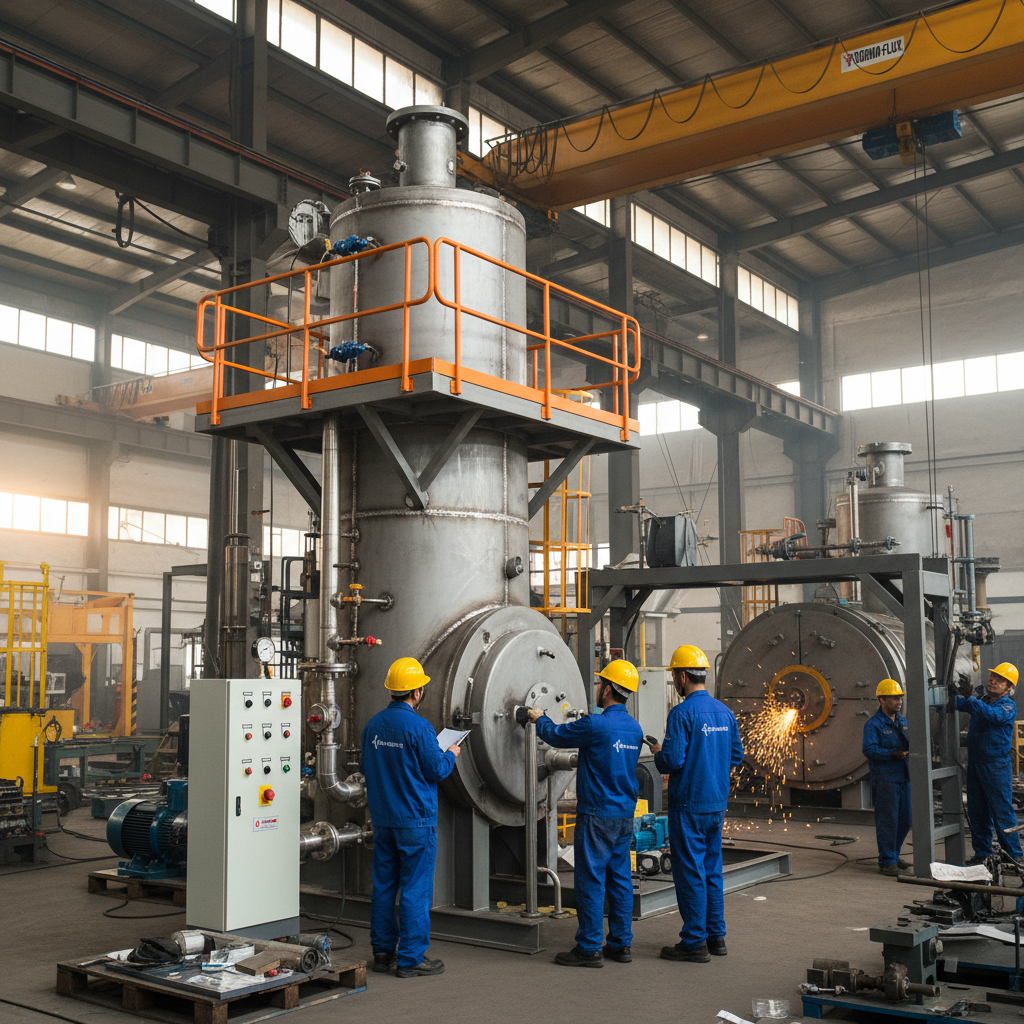
A supplier thermal oil boiler is a specialized industrial heating system designed to heat a heat-transfer fluid (thermal oil) to high temperatures and circulate it through a process system. Unlike steam boilers, these systems operate at lower pressures while achieving significantly higher temperatures, making them indispensable for industries requiring precise and stable thermal energy without the risk of high-pressure steam explosions.
In modern manufacturing, the challenge often lies in balancing energy efficiency with environmental compliance and operational safety. Many facilities struggle with sludge accumulation in boiler drums or inefficient heat transfer that leads to increased fuel consumption and higher pollutant emissions, which directly impacts the bottom line and regulatory standing.
This comprehensive technical analysis explores the critical design features, selection criteria, and performance benchmarks of high-efficiency thermal oil boilers. Readers will gain a professional understanding of how specific architectural improvements, such as corrugated tubes and arched furnace designs, optimize thermal output and reduce operational risks.

1Understanding Thermal Oil Boiler Fundamentals

Thermal oil boilers operate on the principle of heating a specialized organic heat carrier fluid. This fluid is pumped through the boiler's heating coils and then circulated to the point of use. Because the fluid remains in a liquid state even at very high temperatures, the system does not require the massive pressure vessels associated with high-pressure steam, allowing for a safer and often more flexible installation.
The design typically involves a combustion chamber (furnace) and a heat exchange area. In advanced models, the use of an arched tube sheet prevents cracking by distributing thermal stress more evenly, while corrugated tubes increase the surface area for heat transfer, accelerating the temperature rise of the thermal oil.
From a system perspective, these boilers are often integrated with expansion tanks and circulation pumps to manage the volumetric expansion of the oil as it heats up, ensuring the system remains closed and protected from oxidation.
2Core Technical Advantages and Design Features
High-performance thermal oil boilers incorporate specific engineering refinements to maximize efficiency. For instance, the arrangement of ascending calandria under the drum eliminates "dead water zones," preventing sludge from settling at the bottom. This prevents the common "bulge phenomenon" seen in lower-quality boilers, ensuring a more uniform temperature distribution across the drum.
The integration of PLC (Programmable Logic Controller) systems allows for precise control over fuel feeding and temperature regulation. Whether using biomass, coal, gas, or diesel, the automation of the wind box and air-to-fuel ratio reduces the air excess coefficient, which directly increases the boiler's overall thermal efficiency.
Furthermore, the use of CNC bending and robot welding in the manufacturing process ensures that the seams and joints can withstand the thermal expansion and contraction cycles inherent in high-temperature organic heat carrier operations.
3Industrial Applications and Use Case Scenarios
Thermal oil boilers are widely utilized in industries where uniform heating is critical and steam is impractical. In the chemical and pharmaceutical sectors, they provide the steady, high-temperature heat required for reactor jackets and distillation columns without the risk of local overheating or "hot spots" that could degrade sensitive compounds.
In the textile and food processing industries, these systems are used for drying, curing, and frying. For example, biomass-fired thermal oil boilers are increasingly popular in these sectors as a way to reduce carbon footprints while maintaining the high temperatures needed for industrial drying ovens.
Additionally, these systems are employed in wood processing and asphalt production, where the ability to reach temperatures above 250°C safely and efficiently is a primary requirement for material fluidity and processing quality.
4Analyzing Thermal Performance and Efficiency
Efficiency in thermal oil boilers is measured by the ratio of heat energy absorbed by the oil to the energy content of the fuel consumed. Advanced designs, such as the DZL series, achieve design efficiencies of up to 80.4% by optimizing the heating area and reducing smoke emission temperatures.
A critical metric is the heat transfer coefficient. Spirally corrugated tubes increase turbulence within the oil flow, which breaks the boundary layer and allows heat to move from the combustion gases to the oil more rapidly, effectively increasing the steam rate or oil heating rate.
supplier thermal oil boiler Performance Metrics
When analyzing these metrics, it is clear that the reduction of the air excess coefficient via an optimized wind box significantly lowers the fuel consumption per unit of heat delivered, providing a measurable ROI through lower monthly utility costs.
5Procurement Guide and Selection Criteria
Selecting the right boiler requires a detailed analysis of the total heat load (kcal/h or kW) and the required operating temperature. Procurement teams must evaluate the fuel availability—whether biomass, gas, or oil—as this dictates the boiler type and the associated emission control equipment required.
Beyond capacity, the physical footprint and installation requirements are vital. Skid-mounted options offer quicker deployment, while fixed-grate systems may be more suitable for large-scale, permanent installations using bulk biomass fuels.
Finally, the after-sales service infrastructure should be assessed. A professional supplier should provide on-site energy efficiency testing and comprehensive technical documentation to ensure the system is commissioned correctly for the specific local environment.
6Operational Constraints and Maintenance Risks
While efficient, thermal oil boilers have specific constraints. The most significant risk is "oil cracking," which occurs if the oil temperature exceeds its stability limit or if the flow rate is too low, causing the oil to decompose into carbon deposits (sludge) on the inner tube walls.
These carbon deposits act as insulators, reducing heat transfer and creating localized hotspots in the boiler tubes, which can eventually lead to tube failure or leakage. Regular oil analysis is therefore mandatory to monitor the chemical integrity of the heat carrier fluid.
Maintenance schedules must include the cleaning of the furnace and the inspection of the sealing wind box. Ensuring that the air-to-fuel ratio remains optimized prevents the buildup of soot, which further degrades thermal efficiency over time.
7Comparison: Thermal Oil vs. Steam Systems
The decision between a thermal oil boiler and a steam boiler depends on the temperature requirements and the safety profile of the facility. Thermal oil systems are superior for temperatures above 150°C because they do not require the extreme pressures that steam would need to reach those levels.
Steam systems are often more effective for low-temperature applications or where the steam itself is a raw material in the process. However, the risk of scaling and corrosion in steam pipes is significantly higher than in closed-loop thermal oil systems.
| Feature | Thermal Oil Boiler | Steam Boiler | Key Decision Factor |
|---|---|---|---|
| Operating Pressure | Low / Atmospheric | High | Safety/Vessel Cost |
| Max Temperature | Very High (up to 350°C+) | Limited by Pressure | Process Temp |
| Maintenance | Oil Analysis/Cleaning | Water Treatment/Descaling | OpEx Effort |
| Heat Distribution | Uniform (Liquid) | Potential Condensation | Temp Stability |
| Risk Profile | Low Pressure / Oil Fire | High Pressure Explosion | Safety Compliance |
| Energy Loss | Lower (Closed Loop) | Higher (Steam Leaks) | Efficiency |
Ultimately, for high-temperature industrial processing, the thermal oil boiler provides a safer, more stable, and often more energy-efficient alternative to traditional steam generation.
Frequently Asked Questions
Conclusion
The selection of a supplier thermal oil boiler is a strategic decision that impacts both the safety and the operational efficiency of an industrial facility. By prioritizing advanced design features—such as corrugated tubes for enhanced heat transfer and arched furnaces for cleaner combustion—companies can significantly reduce fuel consumption and minimize environmental impact.
For procurement teams and engineers evaluating the most suitable heating solutions for their specific thermal load, detailed product specifications and technical consultations are essential. Further information on high-efficiency boiler systems and customized configurations can be found at www.ynboilers.com.