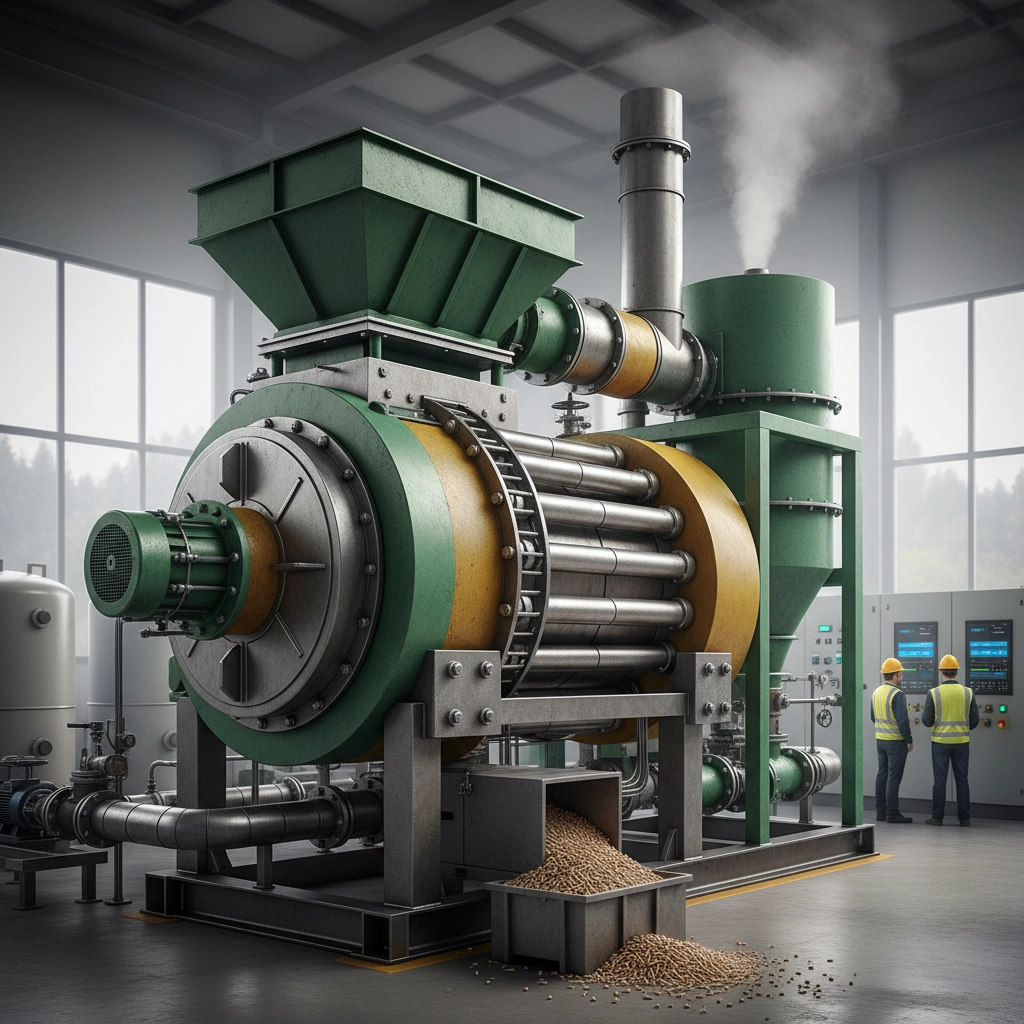
Selecting the right boiler for production is a critical decision for any industrial facility in the energy and environmental equipment sector. Whether the objective is process heating, steam generation, or waste heat recovery, the thermal plant serves as the heart of the production line, directly impacting operational costs and output consistency.
Many manufacturers struggle with balancing fuel efficiency against the rigorous demands of continuous production cycles. Inefficiencies in heat transfer or poor fuel compatibility can lead to unexpected downtime and increased carbon footprints, making the technical alignment between the boiler type and the production load a primary engineering challenge.
This professional analysis evaluates the core technical requirements, selection frameworks, and operational considerations for industrial production boilers, helping engineers and procurement managers identify the most sustainable and cost-effective thermal solutions for their specific manufacturing environment.

Matching Boiler Types to Production Needs

The choice of a boiler for production depends heavily on the required medium—steam, hot water, or thermal oil. For high-pressure sterilization or chemical processing, steam boilers (including coal, biomass, or electric options) are indispensable due to their high latent heat. In contrast, thermal oil heaters are preferred for high-temperature applications that require low pressure, reducing the risk of explosions and simplifying pipeline architecture.
Hebei Yineng Boiler Co., Ltd. provides a wide spectrum of solutions, from biomass-fired steam boilers for sustainable operations to molten salt boilers for specialized energy storage and high-heat production. The ability to switch between fuels, such as gas, diesel, or biomass, allows production facilities to hedge against fuel price volatility and comply with local environmental regulations.
Critical Technical Specifications for Production Loads
A production boiler must be sized not just for peak load, but for the volatility of the production cycle. Under-sizing leads to inadequate process heat and production bottlenecks, while over-sizing results in frequent cycling, which increases mechanical wear and reduces overall fuel efficiency. Key metrics include the evaporation rate for steam boilers and the heat transfer coefficient for thermal oil systems.
Modern production systems often integrate PLC (Programmable Logic Controller) steam boilers to automate the combustion process. By precisely matching fuel input to steam demand, these systems reduce human error and ensure that the thermal output remains stable regardless of external temperature fluctuations or internal load changes.
Integration of Waste Heat Recovery Systems
In large-scale production, particularly those utilizing generator sets, waste heat is a significant untapped resource. Exhaust Gas Boilers (EGB) capture the thermal energy from engine exhaust, converting it into usable steam or hot water without consuming additional fuel. This effectively lowers the total cost of production by utilizing "free" energy.
For instance, the Waste Heat Recovery Boiler for Generator Sets designed for 500kW to 35MW gas/diesel gensets utilizes a water-tube structure with H-finned tubes to maximize heat transfer. Using anti-corrosion ND steel for the flue gas side ensures longevity even when dealing with high-sulfur biogas, making it a viable solution for EPC power plant projects and industrial energy hubs.
Evaluating Thermal Efficiency Drivers
Thermal efficiency in production boilers is driven by the effectiveness of the heat exchange surface and the quality of combustion. Finned tubes and optimized furnace geometry reduce the temperature of exhaust gases before they leave the stack, ensuring that a higher percentage of fuel energy is transferred to the production medium.
The conceptual index below illustrates the relative impact of different technical optimizations on overall system efficiency. While modular assembly reduces installation time, the primary gain in operational cost is achieved through high-efficiency heat recovery and precise PLC control systems.
Operational Risk Mitigation and Safety
Safety is paramount when operating high-pressure equipment for production. Common risks include scale buildup in water-tube boilers and carbonization in thermal oil heaters. Implementing a rigorous water treatment protocol and using high-grade materials, such as those meeting ASME certification requirements, significantly reduces the risk of tube failure and unplanned shutdowns.
Preventative maintenance focuses on the combustion chamber and the heat exchange surfaces. For biomass and coal-fired units, managing ash accumulation through reciprocating or chain grates is essential to maintain airflow and combustion efficiency, preventing "cold spots" that can lead to uneven thermal stress in the boiler shell.
Supplier Evaluation and Certification Standards
When sourcing a boiler for production, buyers must look beyond the initial price tag. A reputable manufacturer should hold a Class A boiler manufacturing license and ISO9001 certification. The presence of an on-site energy efficiency test station allows the buyer to verify the actual performance of the unit before it leaves the factory.
Evaluation should also consider the supplier's ability to provide complete packages—including the generator, boiler, and control cabinets—especially for export projects. This modular approach minimizes site installation errors and ensures that the system components are perfectly synchronized for the intended production load.
Decision Framework for Production Boiler Selection
Choosing the optimal system requires a qualitative comparison of technology types against production constraints. The following framework categorizes common industrial approaches based on their suitability for different production scales and fuel availabilities.
| Technology Type | Best Use Case | Primary Advantage | Key Consideration |
|---|---|---|---|
| Biomass Steam | Sustainable Production | Low Fuel Cost | Fuel Consistency |
| Thermal Oil Heater | High Temp/Low Pressure | Safety & Stability | Oil Degradation |
| Electric Boiler | Small-Scale/Clean Site | No Emissions | Electricity Cost |
| Waste Heat (EGB) | Combined Heat & Power | Zero Fuel Cost | Exhaust Availability |
| Gas/Diesel Steam | Rapid Response Load | High Control | Fuel Price Volatility |
| Molten Salt Boiler | Energy Storage/Solar | High Temp Storage | Material Corrosion |
Ultimately, the selection should be driven by the total cost of ownership (TCO), incorporating the initial capital expenditure, fuel consumption over ten years, and the projected maintenance costs associated with the specific fuel type used in production.
Frequently Asked Questions
Steam boilers use water to produce steam, offering high heat capacity ideal for sterilization and chemical processes, but require high-pressure vessels. Thermal oil boilers use an organic heat carrier, allowing for very high temperatures at low pressures, which increases safety and simplifies the piping system for industrial heating.
An EGB captures the thermal energy from engine exhaust gases—which would otherwise be wasted—and converts it into steam or hot water. This reduces the need for a primary boiler to burn additional fuel, directly lowering the fuel bill and improving the overall energy efficiency of the production facility.
Efficiency depends on the fuel's moisture content and caloric value. Wood pellets and agricultural waste with low moisture are generally more efficient. Using a reciprocating grate system helps maintain consistent combustion regardless of slight variations in biomass quality.
Essential certifications include the ISO9001 quality management system, a Class A boiler manufacturing license, and A2 pressure vessel design licenses. For international projects, ASME certification is highly recommended to ensure compliance with global safety and engineering standards.
PLC systems automate the fuel-to-air ratio and water level controls in real-time. This prevents inefficient combustion and protects the boiler from dry-firing or overheating, ensuring a stable thermal output that matches the production line's demand exactly.
Yes, many production plants use a hybrid approach. Steam is used for processes requiring high latent heat or sterilization, while thermal oil is used for high-temperature drying or chemical reactors where low pressure is required for safety.
Conclusion
Selecting a boiler for production is an exercise in matching thermal output to process demand while optimizing for fuel cost and safety. From the high-efficiency heat recovery of EGB systems to the versatility of biomass and thermal oil heaters, the goal is to create a resilient energy loop that supports continuous manufacturing without unnecessary waste.
For organizations evaluating their thermal infrastructure or seeking to integrate waste heat recovery into their production line, detailed technical specifications can be reviewed at www.ynboilers.com to ensure the selected equipment meets both operational and regulatory requirements.